Nobody arrives at this comparison casually. It is almost always prompted by a renewal quote that came back at a number nobody budgeted for, with about ninety days to decide.
In short: Citrix remains the strongest option for very large estates, difficult network conditions and graphics-heavy work, and is increasingly hard to justify below that. Parallels RAS is the better fit for on-premises and hybrid estates publishing applications, licensed by concurrent user rather than named user, with load balancing, gateway and multi-tenancy in the one product. Native Azure Virtual Desktop and Windows 365 is the better fit where the estate is already Microsoft-centric and people need desktops rather than published applications, with EtherInsights at £0.79 per licensed user per month supplying the cost, posture and day-two management layer that Citrix used to bundle.
Why the question is being asked at all
Citrix has not become a worse product. It has become a differently priced one.
Under Cloud Software Group, licensing moved from à la carte to bundled subscriptions, minimum seat commitments arrived, and renewal quotes have come back substantially higher, in some cases at roughly double, usually with about ninety days of notice. Components that an estate does not use turn up in the bundle, and the seat floor frequently sits above real headcount.
For a large organisation using most of the platform, that can still be the right buy. For a business of a few hundred seats that adopted Citrix when it was the only credible option, and now publishes a dozen applications to a workforce that is partly part-time, it means paying enterprise pricing for a fraction of the product.
A renewal deadline is the worst possible condition to choose a remoting platform under, and vendors know it. If there is not enough runway to migrate properly, a short renewal on the best available terms while the replacement is designed is usually a better decision than either a rushed migration or a three-year commitment signed under pressure.
Parallels RAS: the on-premises and hybrid answer
RAS publishes applications and desktops from RDSH, VDI or Azure Virtual Desktop, and brokers across VMware ESXi, Hyper-V, Nutanix and Scale as well as Azure and AWS. That breadth is the point: it meets an estate where it currently is, rather than requiring it to move first.
Two things decide most cases.
Concurrent-user licensing. RAS bills the maximum number of simultaneous connections, not the number of people with accounts. Where a workforce is shift-based, part-time, seasonal, or working from shared devices on a clinical or factory floor, peak concurrency sits well below headcount and the gap is the saving. Where everybody works full time and connects all day, it saves very little, and that is worth establishing in an hour rather than assuming for a quarter.
One product rather than editions. HALB load balancing, the secure gateway, multi-tenancy, FSLogix profile container support, MSIX app attach and App-V integration, and clients for Windows, macOS, Linux, iOS, Android and the browser are all in the single product rather than distributed across tiers.
The honest limits are real. HDX is ahead over poor networks and for graphics-heavy work. At many thousands of seats with deep ecosystem integration, replacement is a programme rather than a swap. And Citrix App Layering has no exact equivalent, so where that is genuinely in use it can decide the answer by itself.
Native AVD and Windows 365: the Microsoft-centric answer
If the applications are modern, the estate is already Microsoft-centric, and what people need is a desktop rather than finely controlled published applications, the simplest answer is usually no third-party broker at all.
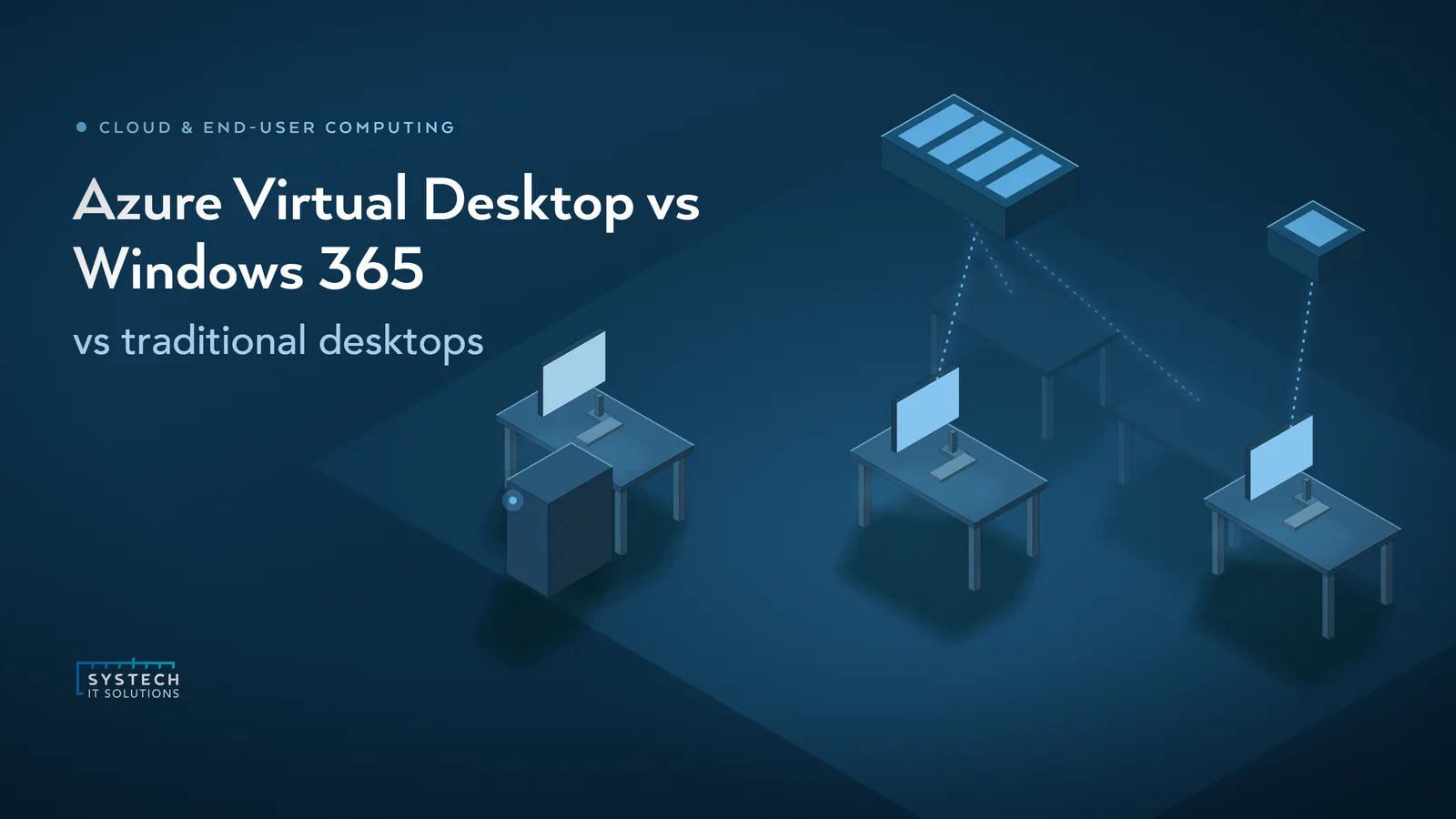
Azure Virtual Desktop is metered Azure consumption, which suits variable and elastic usage. Windows 365 is a fixed per-user subscription, which suits predictable full-time users and removes the sizing exercise entirely. Our AVD vs Windows 365 vs traditional desktops guide covers choosing between those two in detail.
One vendor instead of two is a genuine advantage, and we say so as a company that sells the broker as well.
The management layer nobody prices in
Here is the part that catches estates out, and it is the strongest single argument in the whole comparison.
Citrix bundles two different things: brokering sessions, and the console that shows you what the estate is doing. Leave Citrix for native Microsoft and you keep the desktops, but you lose the single place where cost, usage, posture and day-two management were visible. Microsoft's own tooling covers pieces of it across several different portals, and the gap usually surfaces a few months later, when somebody asks what the Azure bill is being spent on per team, or which accounts are over-permissioned, and the answer takes a week to assemble.
EtherInsights is the layer we put in its place on AVD and Windows 365 estates. Cloud cost attribution and forecasting, Microsoft 365 security posture, Copilot readiness and day-two management, in one view, at £0.79 per licensed user per month.
On a 250-seat estate that is roughly £198 a month. Set against a Citrix bundle priced per named user with a seat floor, the comparison is not close, and it is worth being precise about why: you are no longer buying brokering and visibility as one product. The brokering question gets answered by AVD or Windows 365, and the visibility question gets answered separately and far more cheaply.
It is an analysis platform, not a managed service and not a remediation tool. It tells you what is true and what it is costing. It does not broker sessions, and it is not a Citrix replacement on its own.
The full comparison
| Citrix | Parallels RAS | AVD and Windows 365 | |
|---|---|---|---|
| Licensing model | Bundled subscription, named user, minimum seat commitment | Single product, concurrent user | AVD metered Azure consumption; Windows 365 fixed per user |
| What is included | Bundle contents fixed, components you may not use | Load balancing, gateway, multi-tenancy, FSLogix, MSIX app attach | Microsoft platform only, no third-party broker |
| Back ends brokered | Broad, plus deep ecosystem integration | RDSH, VDI, Azure, AVD across VMware, Hyper-V, Nutanix, Scale | Azure only |
| Protocol strength | HDX, strongest over poor networks and for graphics | Good for typical office workloads | Good for typical office workloads |
| Management layer | Included in the bundle | Included in the product | Not included; EtherInsights at £0.79 per user per month |
| Best fit | Very large estates, difficult networks, graphics-heavy work | On-premises and hybrid, published applications, variable concurrency | Microsoft-centric estates needing desktops |
| Where it stops making sense | Bundle and seat floor exceed what the estate uses | Very large scale, or HDX-class performance required | Applications must be published to mixed on-premises back ends |
How to decide, in order
Take these in sequence, because answering them out of order is what produces the wrong platform.
- Inventory what is actually published. Applications, who uses them, from where, on what devices. This is almost always shorter than people expect, and it determines feasibility more than any other factor.
- Measure peak concurrency against named licences. An hour's work, and it either makes the concurrent-user argument or removes it.
- Find the dependencies that decide it. HDX-class performance, App Layering, a specific integration. One real dependency outranks every cost argument on this page.
- Ask where the applications and data actually live. On-premises and hybrid points at RAS. Microsoft-centric and modern points at native AVD or Windows 365.
- Decide the management layer deliberately, at the point of migration rather than six months afterwards.
- Pilot with real users and real peripherals. Printing, scanners, smart cards, USB devices and the one undocumented legacy application are where remoting migrations fail, and they only surface with people doing actual work.
Where we land
For on-premises and hybrid estates, Parallels RAS is the stronger answer, and it has the additional advantage of letting you solve the renewal now and decide about Azure later, on its own merits, rather than turning one deadline into two projects.
For AVD and Windows 365 deployments, go native and add EtherInsights for the cost, posture and management visibility. That combination is the way forward for a Microsoft-centric estate, and at £0.79 per licensed user per month the visibility costs a fraction of what it did as part of a bundle.
For very large estates, difficult network conditions or graphics-heavy work, stay on Citrix and negotiate. We would rather tell you that than sell you a migration that makes your users' day worse.
We deliver all three, including the Parallels RAS work, the AVD and Windows 365 consultancy, and the endpoints people connect from. The recommendation does not change depending on which one you pick.
This is one of a series. The rest, covering licensing, desktops, support models and certification in the same format, are listed on all our IT comparison guides.
Frequently asked
Why are so many businesses leaving Citrix?
Commercial reasons rather than technical ones. Under Cloud Software Group, Citrix moved from à la carte licensing to bundled subscriptions, introduced minimum seat commitments, and renewals have come back substantially higher, in some cases at roughly double, typically with around ninety days' notice. For a large estate using most of the platform that can still be defensible. For a mid-sized estate that adopted Citrix when it was the only credible option and now publishes a handful of applications, it means paying enterprise pricing for a fraction of the product. Citrix has not got worse; it is priced for a different customer than the one it used to serve, and a lot of estates no longer are that customer.
Is Parallels RAS or Azure Virtual Desktop the better Citrix replacement?
It depends on where your applications and infrastructure actually live, and the split is fairly clean. Parallels RAS is the stronger answer for on-premises and hybrid estates: it brokers to RDSH and VDI across VMware, Hyper-V, Nutanix and Scale as well as Azure, and it publishes individual applications with fine-grained control, which is what most long-standing Citrix deployments are actually used for. Native AVD with Windows 365 is the stronger answer where the estate is already Microsoft-centric, the applications are modern, and what people need is a desktop rather than a set of published applications. The mistake is choosing on licence price alone, because the two are solving slightly different problems.
How does concurrent-user licensing change the cost?
It bills the maximum number of simultaneous connections rather than the number of people with accounts, which only matters for particular workforce shapes. Shift-based work, part-time and job-share staff, seasonal peaks, and shared devices on clinical, retail or factory floors all produce a peak concurrency well below headcount, and that gap is the saving. Where everyone works full time and connects all day, concurrency saves very little and anyone telling you otherwise has not looked. The test takes about an hour: pull peak simultaneous sessions from your existing platform's own reporting and compare it against the named licences you currently pay for.
What do you lose by moving from Citrix to Parallels RAS?
Three things, and they are worth establishing before a migration rather than during one. HDX, which is genuinely ahead over poor networks and for graphics-heavy or 3D work, so users on satellite links, in poorly connected sites, or running CAD will feel the difference. Scale and ecosystem, because at many thousands of seats with deep monitoring and automation integration a replacement becomes a programme rather than a swap. And specific features such as Citrix App Layering, which have no exact equivalent. In most mid-sized estates nobody is using the third category, but where one of those dependencies is real it decides the answer on its own.
If we go native to AVD or Windows 365, what management do we lose?
The console. Citrix bundles brokering and management together, so leaving it for native Microsoft means you keep the desktops and lose the single place where cost, usage, posture and day-two management were visible. Microsoft's own tooling covers pieces of this across several portals, and most estates discover the gap a few months in, when somebody asks what the Azure bill is actually being spent on per team, or which accounts are over-permissioned. That gap is fillable cheaply, but it should be a decision made deliberately at the point of migration rather than a surprise afterwards.
What does EtherInsights cost and what does it actually do?
£0.79 per licensed user per month. It covers cloud cost attribution and forecasting, Microsoft 365 security posture, Copilot readiness and day-two management, in one place. It is an analysis platform rather than a managed service or a remediation tool: it tells you what is true and what it is costing, and it does not broker sessions or replace a remoting platform. On a 250-seat estate that is around £198 a month, which is the context that makes the Citrix comparison stark: the management visibility you were paying enterprise bundle pricing for is available as a separate, considerably cheaper layer once the brokering question is answered somewhere else.
Can we leave Citrix without moving to Azure at the same time?
Yes, and it is frequently the right sequence. Parallels RAS runs on the infrastructure you already have, so the commercial problem, the renewal, can be solved on its own timetable, and the architectural question of whether to move into Azure can be answered later on its merits. RAS also integrates with Azure Virtual Desktop directly and can manage it rather than replace it, so that later move does not mean another migration off the broker. Trying to do both at once is how remoting migrations stall, because a single project then depends on two sets of decisions, two budgets and two sets of testing.